
The market dominance of MERN in 2026
MERN remains dominant in 2026 due to its unified JavaScript stack, scalability, rapid development, cloud readiness, and strong industry demand for full-stack web apps.
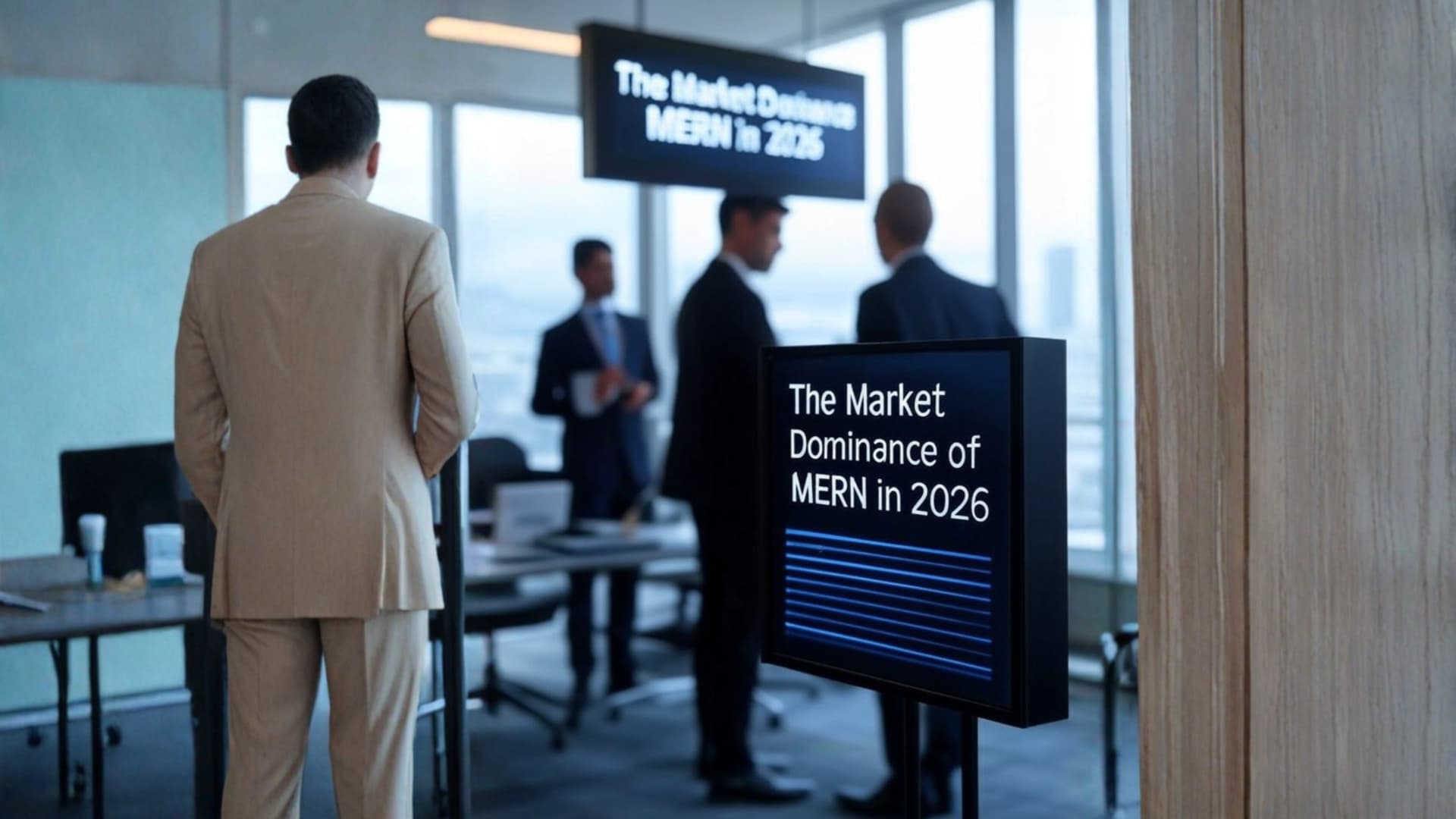
The Market Dominance of MERN in 2026
In 2026, the MERN stack (MongoDB, Express.js, React, Node.js) continues to be one of the most widely adopted tech stacks for building scalable, performant, and modern web applications. Its dominance isn’t accidental—it’s built on an ecosystem that solves real business needs in cost, speed, flexibility, and developer productivity.
🧠 What Exactly Is MERN?
At its core, MERN is a full JavaScript stack:
- MongoDB — Document-oriented NoSQL database
- Express.js — Backend framework for API and server logic
- React.js — UI library for building dynamic interfaces
- Node.js — JavaScript runtime powering the backend
Because every layer speaks the same language—JavaScript—teams can build, deploy, and maintain apps faster than ever before.
📊 Why MERN Still Rules the Market in 2026
1. Unified JavaScript Across the Stack
One of MERN’s enduring advantages is its end-to-end JavaScript ecosystem. Developers no longer juggle separate languages between frontend and backend, reducing context switching and accelerating development timelines.
This translates to:
- Faster onboarding for new developers
- Smaller, more cohesive teams
- Reusable logic across client and server code
2. React’s Unmatched Frontend Position
React remains one of the most dominant frontend libraries in 2026, especially with enhancements like React Server Components and improved rendering performance. These advances push MERN ahead in building interactive, high-performance user interfaces that scale to millions of users.
3. Built for Modern, Real-Time Experiences
From chat apps to real-time dashboards, MERN excels at handling dynamic data and user interactions. Node.js’s event-driven architecture and MongoDB’s scalable design ensure apps stay responsive even as traffic grows.
4. Cloud, Serverless & Edge Integration
Modern deployments increasingly lean on:
- Serverless platforms (AWS Lambda, Cloudflare Workers)
- Edge networks (Vercel, CloudFront)
MERN adapts well to these deployment models, enabling ultra-fast global delivery without manual infrastructure scaling.
5. AI-Native Development Practices
MERN has evolved beyond traditional CRUD apps. In 2026:
- AI features like recommendation engines, chatbots, and vector search are built directly into MERN applications.
- Tools like TensorFlow.js work smoothly within MERN environments.
This positions MERN not just as a web stack, but as a foundation for intelligent apps.
6. Massive Community and Open Ecosystem
A strong, active community underpins MERN’s longevity:
- Thousands of open-source libraries
- Fast solutions for common problems
- Constant security and performance improvements
For companies, this means shorter development cycles and reliable support for long-term projects.
🔍 Use Cases Driving MERN Adoption
In 2026, MERN isn’t just popular—it’s functional across industries:
| Industry | Why MERN Fits |
|---|---|
| SaaS Platforms | Deploy dynamic UIs and handle heavy traffic |
| E-Commerce | Real-time inventory & personalized experiences |
| FinTech Dashboards | Responsive data visualization & analytics |
| Healthcare Apps | Real-time updates & secure interactions |
| Social Networks | Scalable chat and live feeds |
| AI-Enhanced EdTech | Personalized learning with ML integrations |
This breadth of real-world use proves that MERN isn’t confined to basic web solutions—it’s powering next-generation software.
📉 Challenges & Emerging Alternatives
Even as MERN remains dominant, some tech leaders note that other stacks and hybrid architectures are gaining attention:
- GraphQL-centric APIs for more efficient data fetching
- Relational alternatives (e.g., PostgreSQL-based stacks) for complex data workflows
- Serverless full-stack frameworks that abstract setup entirely.
However, these alternatives often complement rather than replace MERN. The ecosystem continues to morph, but the foundational principles of speed, flexibility, and JavaScript ubiquity persist.
📈 What This Means for Developers
Skill demand for MERN developers remains strong in 2026, but expectations have evolved:
✅ Real project experience (not just tutorials)
✅ Strong understanding of APIs, cloud, and deployment
✅ Familiarity with TypeScript and modern best practices
Simply knowing the basics isn’t enough; excellence in MERN now requires real product thinking.
🎯 Conclusion: MERN Isn’t Just Surviving—It’s Evolving
In 2026, the MERN stack is far from outdated. Its dominance stems not from hype, but from tangible business value:
- Unified development experience
- Scalable architecture
- Cloud & AI-ready ecosystem
- Strong hiring demand
- Proven success in real applications
While other stacks may rise alongside it, MERN’s versatility and industry penetration make it one of the most reliable choices for full-stack development today.
Previous
AI-First Development and Agentic Workflows
How AI agents are reshaping the software development lifecycle in 2026 — from prompt-driven scaffolding to autonomous multi-agent systems.
Next
Getting started with nextjs 15
Learn the fundamentals of Next.js 15 and build your first modern web application
Related Posts

Imposter Syndrome Reflections
A candid, personal exploration of imposter syndrome in the tech industry, complete with coping mechanisms and strategies for building supportive communities.

AI-First Development and Agentic Workflows
How AI agents are reshaping the software development lifecycle in 2026 — from prompt-driven scaffolding to autonomous multi-agent systems.
Getting started with nextjs 15
Learn the fundamentals of Next.js 15 and build your first modern web application